CC: Minister of Finance of Quebec and opposition party leaders
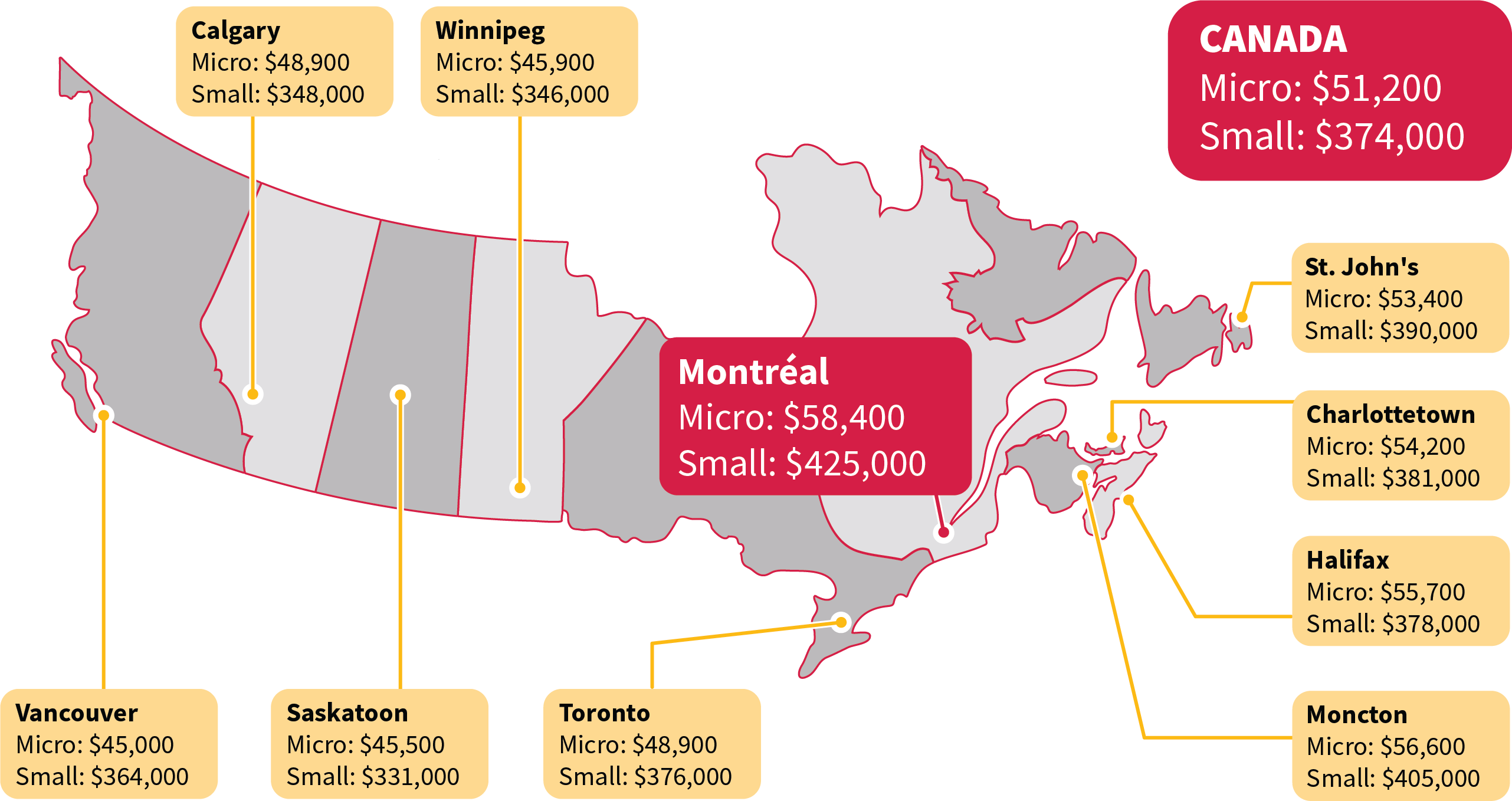
Quebec’s tax environment penalizes SMEs more than any other in North America.1
Its small business tax rate is 37% higher than the average of Canadian provinces.
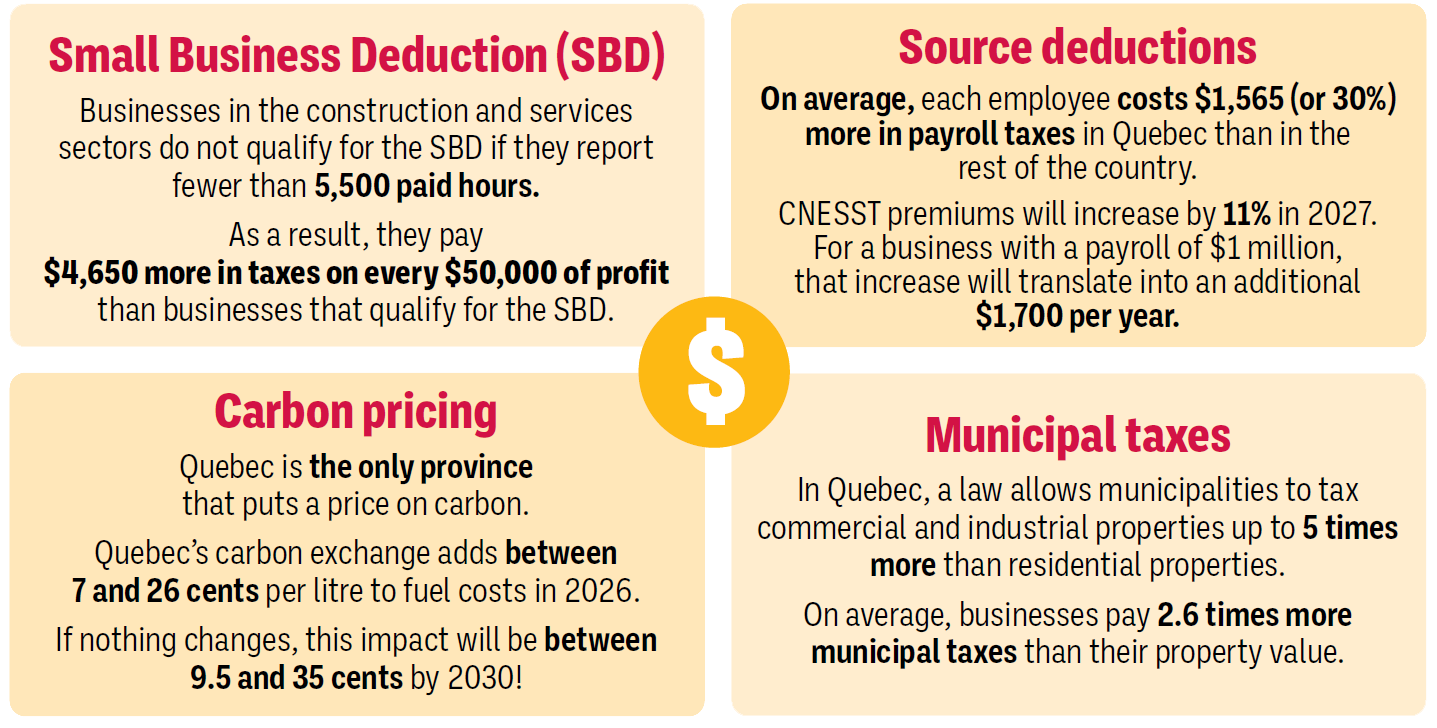
It’s also the only province where the smallest businesses in the construction and services sectors are excluded from that reduced rate. As a result, they pay taxes that are 5 times higher, unfairly penalizing them and undermining their stability and growth. Correcting this tax inequity would create 10,000 direct, indirect, and induced jobs.2
Quebec SMEs also pay the highest payroll taxes in the country. They pay about 30% more than businesses elsewhere in Canada and, unlike smaller businesses in other provinces, do not qualify for exemptions from certain education- and health-related payroll contributions.3 Additionally, CNESST premiums will increase by 11% in 2027, further exacerbating the situation.
It’s time for Quebec to provide the most competitive business environment in the country to increase purchasing power, improve productivity, create jobs, and support regional economic development.4
We’re asking the Quebec government to:
- Lower the corporate tax rate from 11.5% to 9.5%, as was promised in the general election.
- Eliminate the unfair rule that excludes the smallest businesses in the services and construction sectors from the SBD, a restriction found nowhere else in Canada.
- Gradually reduce the small business tax rate to 1.6%, to align it with the provincial average in Canada.
- Increase the SBD threshold (e.g., to $700,000) and the passive income amount (e.g., to $60,000), and index those thresholds to inflation going forward.
- Implement a basic exemption for the Health Services Fund (including for self-employed workers).
- Gradually reduce Health Services Fund contributions to bring Quebec’s payroll tax burden in line with the Canadian average of 10.1%.
- End carbon pricing.
- Reduce the cap that allows municipalities to tax commercial and industrial properties up to 5 times more than residential properties.
It’s time to deliver!
1: CFIB, Uneven Ground: Canada’s Business Tax Disadvantage Compared to the United States, September 2025, 62 p. Available online: https://www.cfib-fcei.ca/hubfs/research/reports/2025/uneven-ground-en.pdf
2: AppEco, Analyse des retombées économiques potentielles d’élargir l’accès à la DPE, 13 p. Available online: https://www.cfib-fcei.ca/hubfs/research/reports/2024/2024-02-qc-appeco-elargir-acces-dpe-fr.pdf (in French only)
3: CFIB, The Weight of Payroll Taxes, https://www.cfib-fcei.ca/hubfs/research/reports/2023/2023-09-weight-payroll-taxes-en.pdf
4: Mémoire de la FCEI déposé dans le cadre des consultations prébudgétaires 2026-2027 du ministère des Finances du Québec:
https://www.cfib-fcei.ca/hubfs/advocacy/pdf/2026/2026-02-Memoire-prebudgetaire-2026-2027-FCEI.pdf (in French only)