

Application deadline EXTENDED for credit card class action settlement claims:

Undocumented & Simplified claims: NOW OPEN until December 30, 2022

Documented Claims: Open until December 30, 2022


As part of a class action lawsuit settlement, Visa and Mastercard have agreed to allow merchants to decide if they want to pass on the cost of accepting credit cards to their customers. Starting October 6, 2022, businesses will be able to charge an additional fee at the point of sale if a customer wishes to pay by credit card. 

Due to Consumer protection laws in Quebec, the option to surcharge will not be available to Quebec-based merchants. Quebec based merchants will be allowed to surcharge other merchants

Did you know that the Credit Card Class Action settlement claim deadline for all sizes of businesses was extended to December 30, 2022? Learn more

As part of a class action lawsuit settlement, Visa and Mastercard have agreed to allow merchants to decide if they want to pass on the cost of accepting credit cards to their customers. Starting October 6, 2022, businesses will be able to charge an additional fee at the point of sale if a customer wishes to pay by credit card. 

Due to Consumer protection laws in Quebec, the option to surcharge will not be available to Quebec-based merchants.   


Eligibility 

Application deadline is December 30, 2022!

You’re eligible to receive a portion of the settlement if you:
 
•  Were a merchant in Canada at any point between March 23, 2001, and September 2, 2021,
• Accepted Visa and/or Mastercard credit cards as payment for goods and services,
•  Incurred merchant discount fees, including interchange fees.

How to Claim

Starting May 30, 2022, you can submit a claim through the Credit Card Class Action website. What you will need to know: 
 
•    Name
•    Contact information
•    Size of your business / annual revenues during the claim period (can be classified as a small, medium, or large business – see table below)
•    Attestation that you collected credit card payments at some point since March 23, 2001 – more information to come on details of attestation requirements
 
Note: No documentation is required for merchants classified as “small businesses”.

Claim Here


Two women looking at a computer

Process

You will receive confirmation that your claim was submitted successfully. Your application will then be reviewed and either approved or denied.
 
If you are approved, you can expect to receive your funds before the end of 2022 by direct deposit or cheque (opting for a cheque will deduct $2 from your claim).
 
If you are denied, you will receive a decision notice. No appeal process exists for small business claims. If you have any concerns, you can speak to the claim administrator.

Close up low angle view of a man working from home on a laptop computer sitting at a desk surfing the internet


How Much You'll Receive


Merchant size Average annual revenue over the claim period Amount you can receive per year you incurred merchant discount fees
Small merchant Less than $5 million $30 / year (max $600)
Medium merchant Between $5 million to $20 million $250 / year (max $5,000)
Large merchant $20 million + $250 / year 

What is a surcharge? 

A credit card surcharge is any fee added when a customer decides to pay by credit card. It is different from a convenience fee which merchants can add to a transaction regardless of the method of payment. A credit card surcharge is only added to credit card transactions.  

Why surcharging matters

Credit card processing fees can be very difficult to track and come with a significant cost. Over the years, merchants have seen these costs rise, especially smaller merchants who often pay much more than larger companies to accept credit cards making it more difficult for them to compete with large companies. Businesses should be allowed to explain to their customers why their prices increase and decide if they will pass this cost to their customers. 

Until now, most businesses were not permitted to surcharge. Following a class action lawsuit, Visa and Mastercard are allowing businesses to pass along the cost of processing a credit card transaction to consumers.  

credit-card-transaction-800x600

How to start surcharging?

Before beginning to surcharge credit card transactions there are certain considerations to be mindful of, and requirements to meet, to prevent complaints and consequences for the improper implementation of credit card surcharging.

3 Notification requirements at least 30 days before Surcharging:

3 Disclosure requirements when surcharging:

Printable Posters & Templates

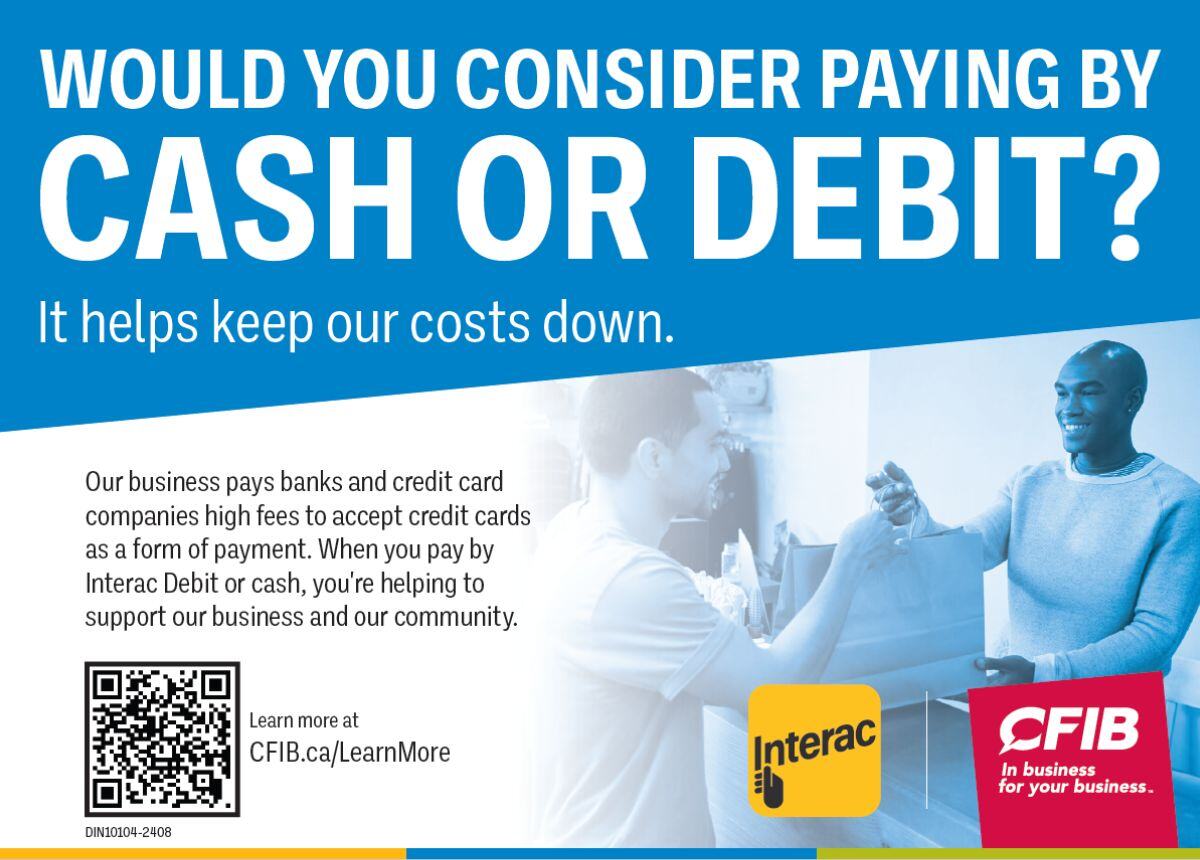
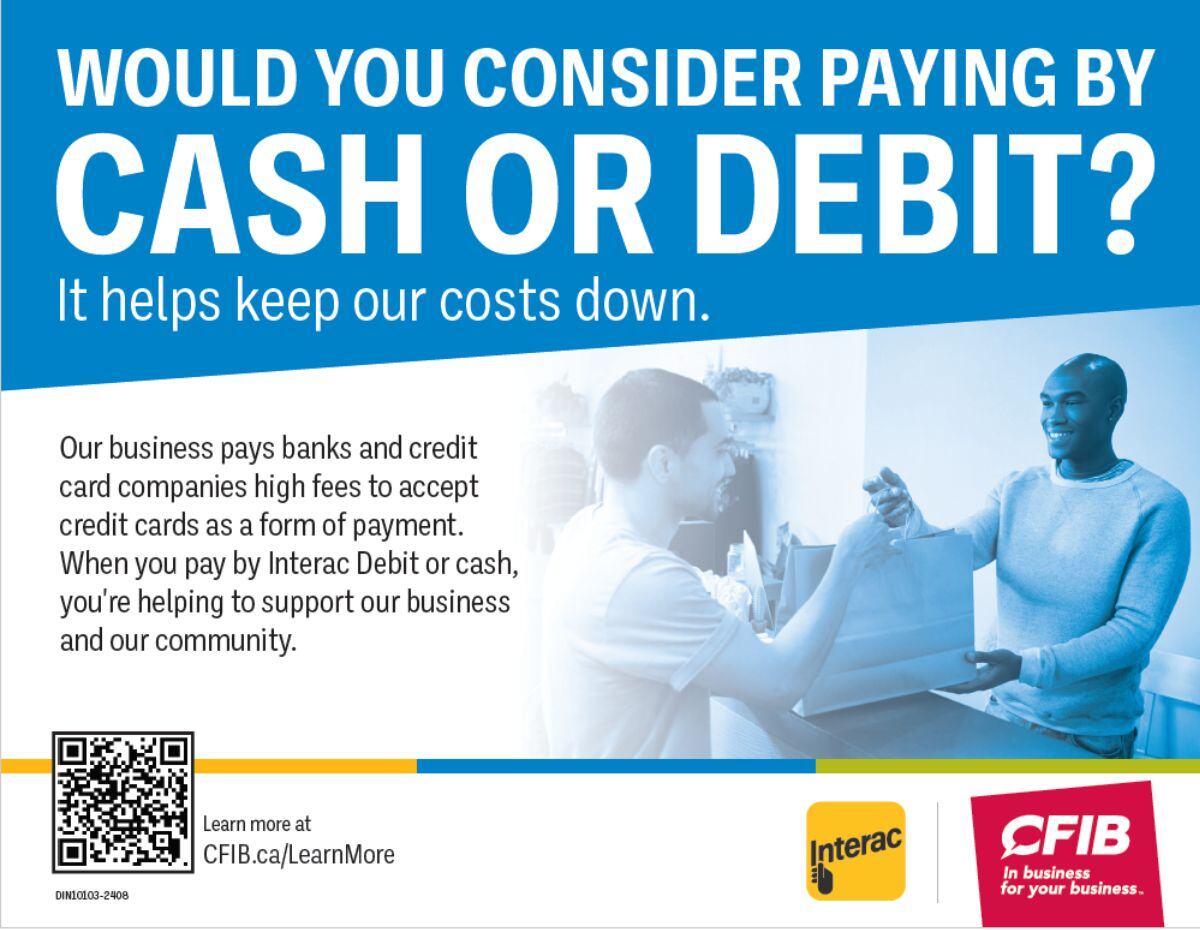
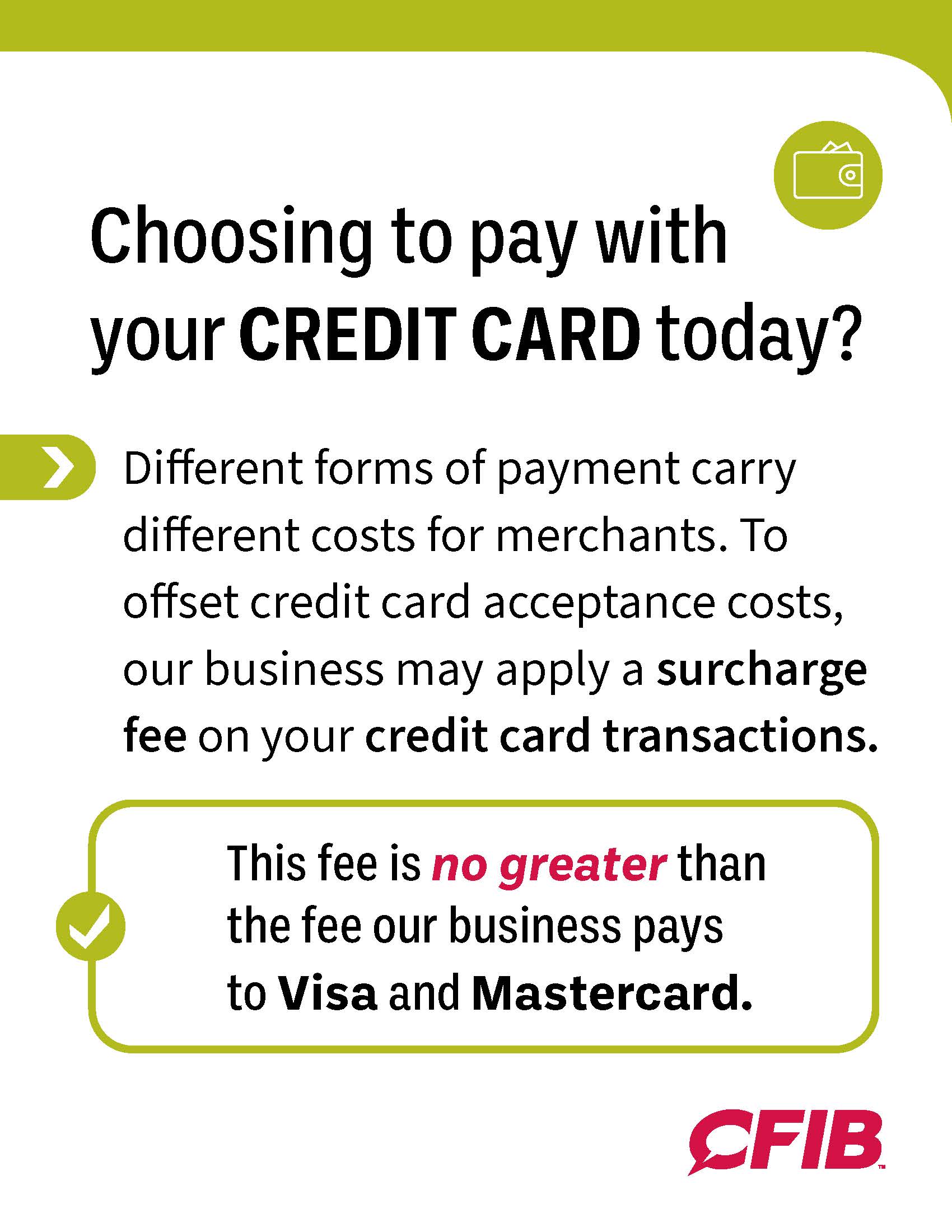
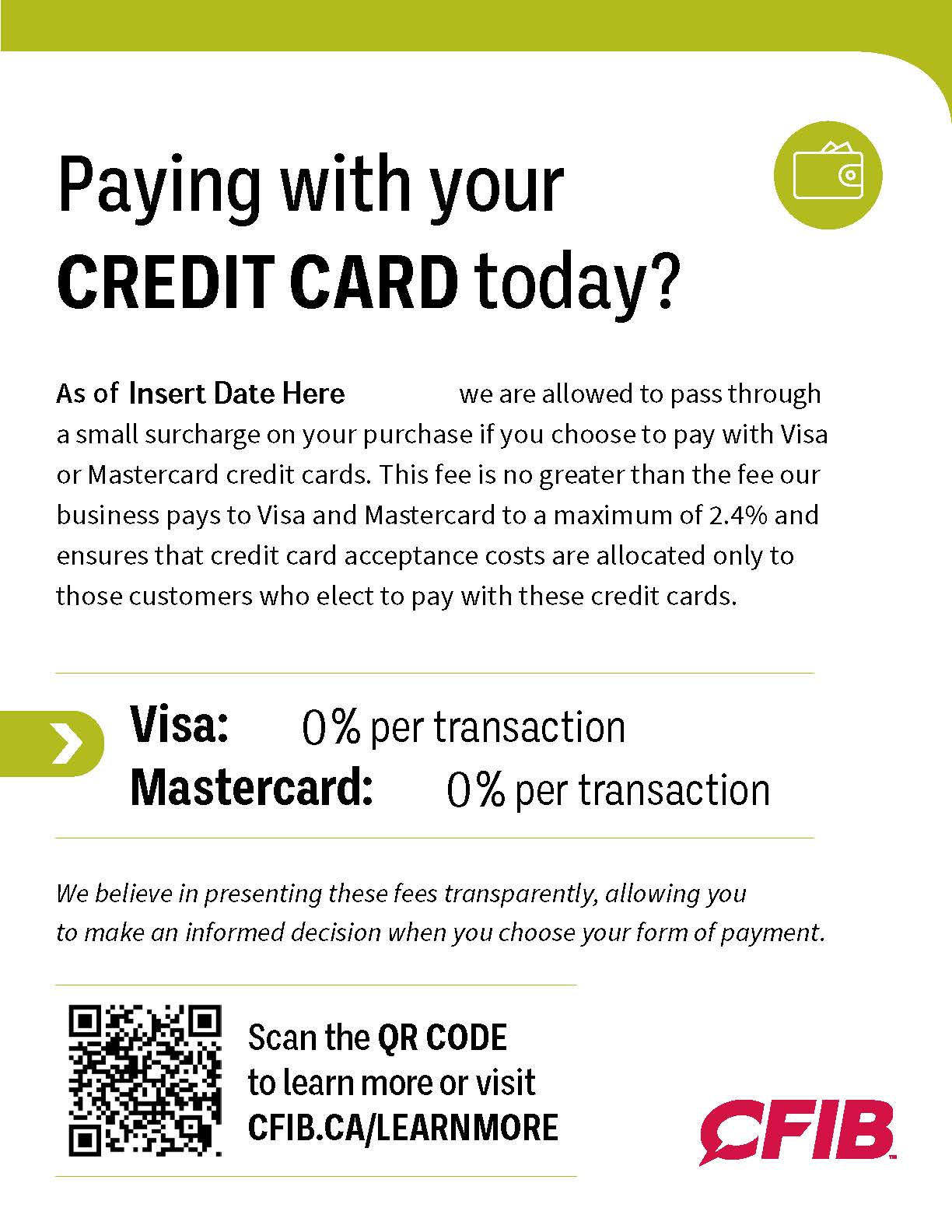
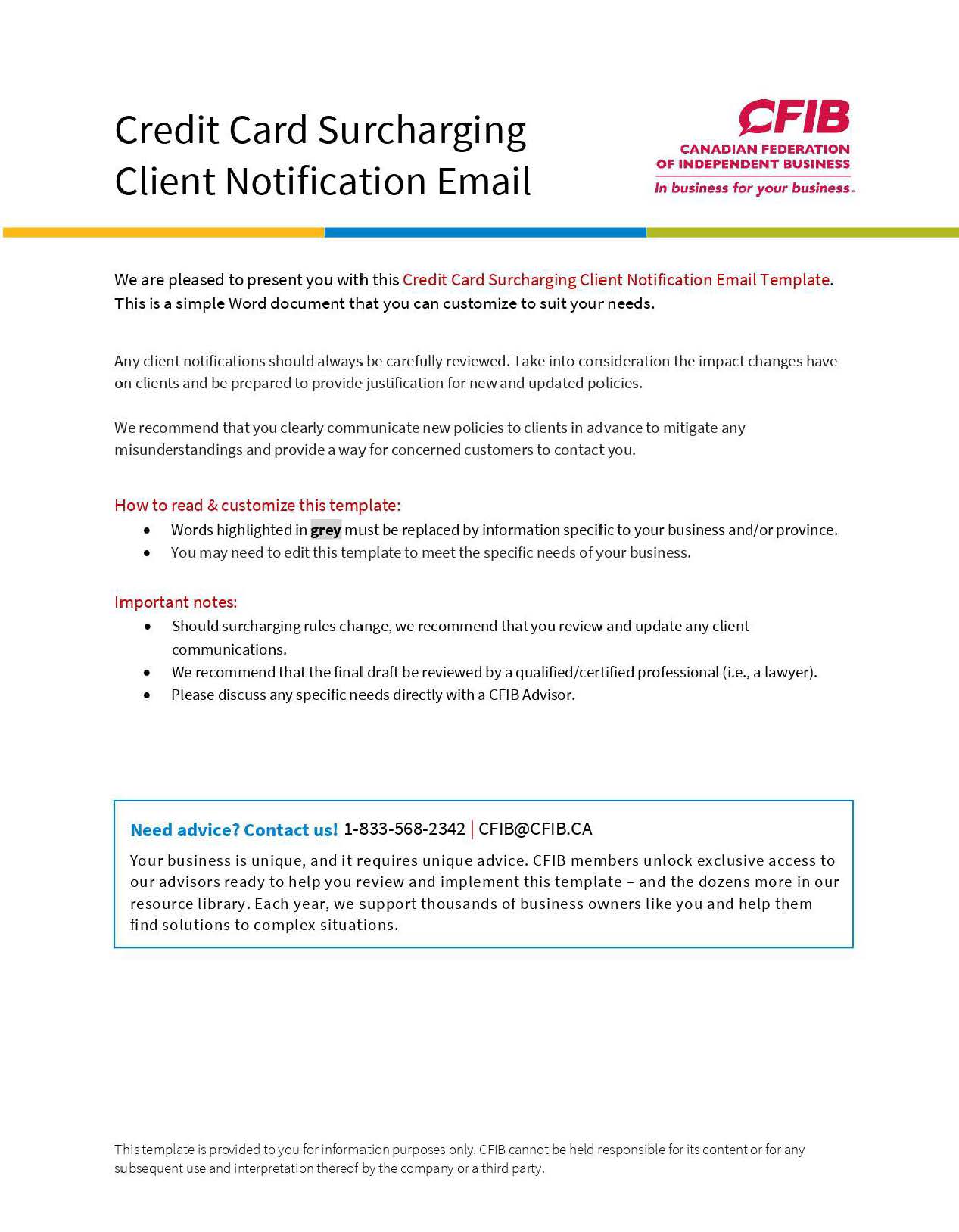
Whether you are looking to surcharge or encourage consumers to use alternatives like debit or cash, CFIB has posters, checklists, and email templates to suit your business needs.
Templates
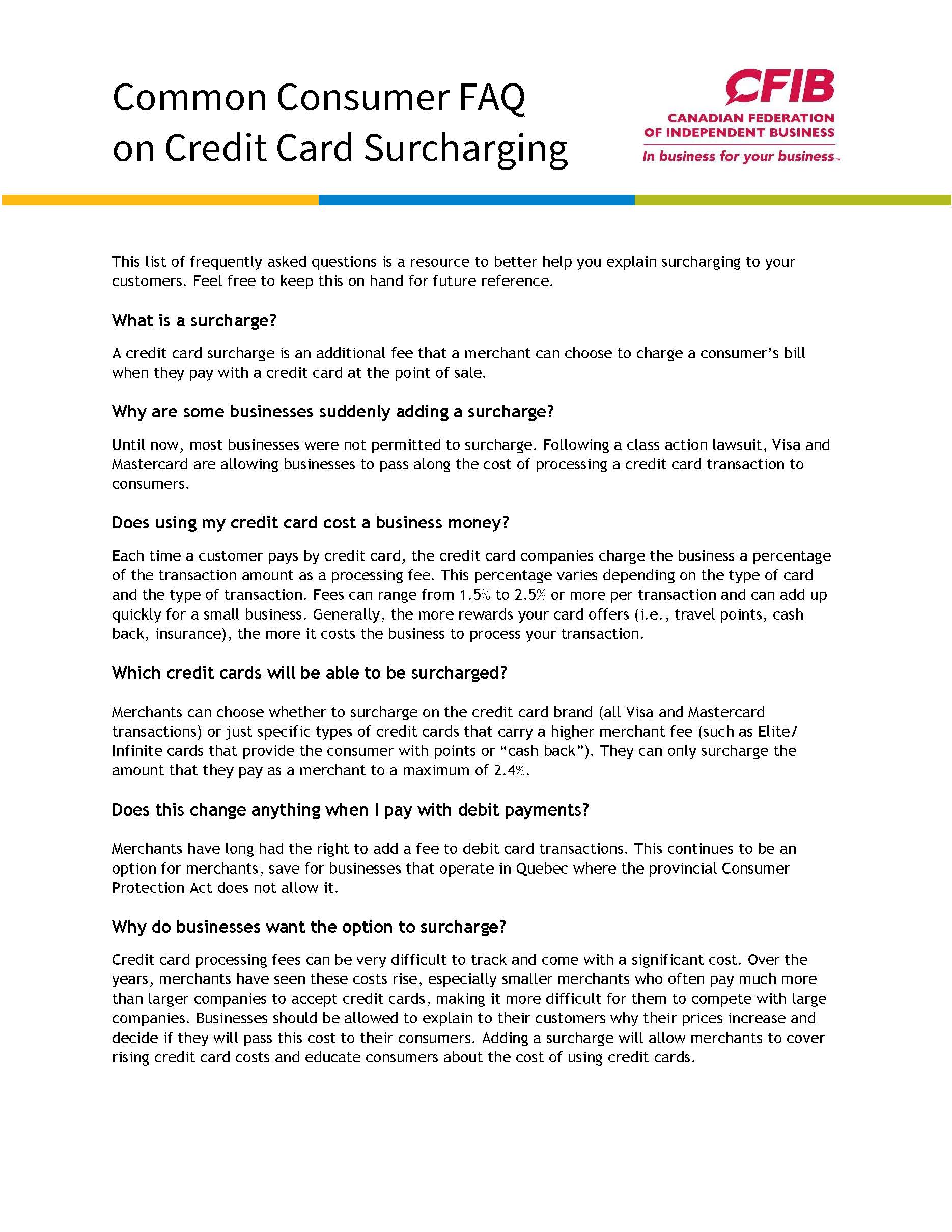
Consumer_FAQ_on_CC_Surcharging
Consumer FAQ on Credit Card Surcharging
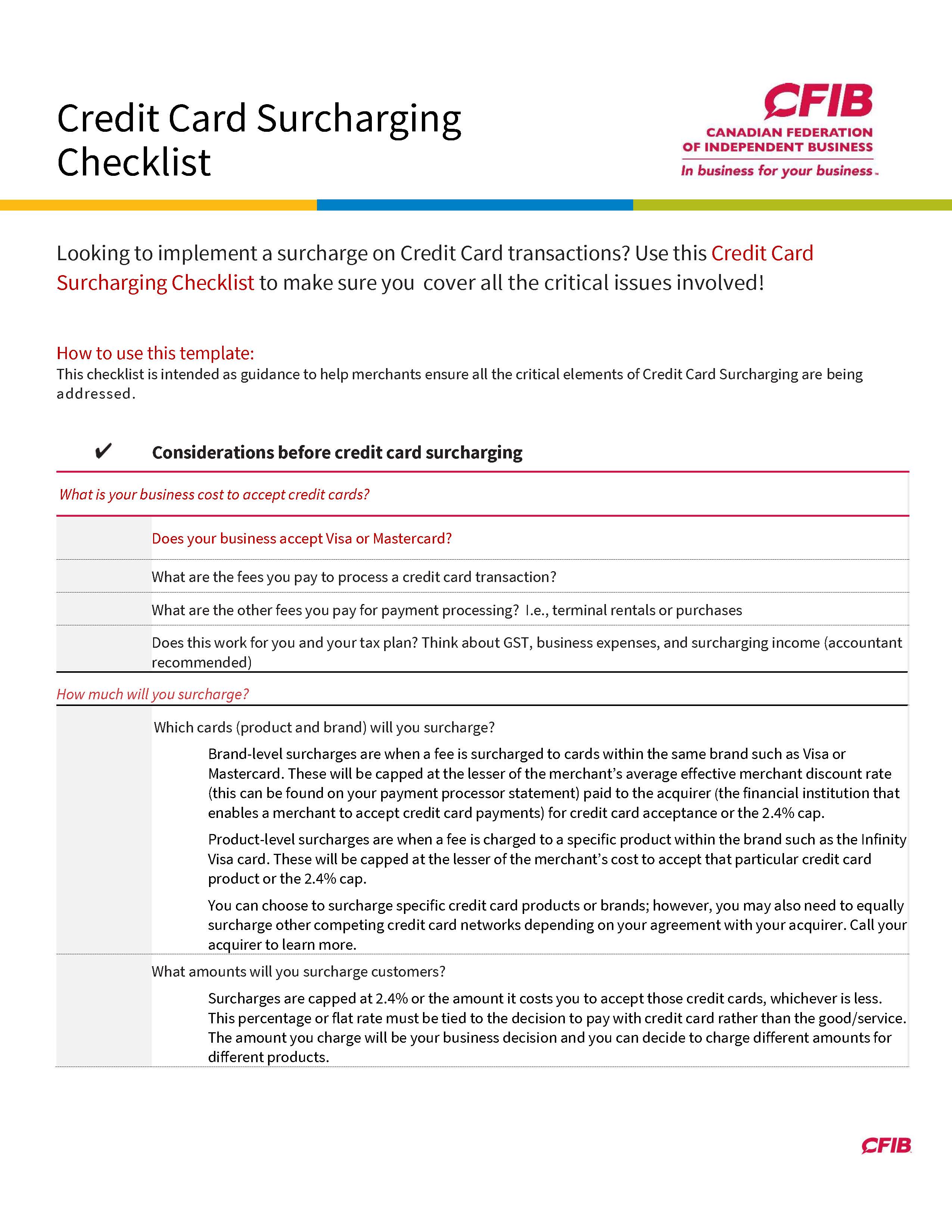
CC_Surcharging_Checklist
Credit Card Surcharging Checklist
CC_Surcharging_Client_Notification_Email_Template
Credit Card Surcharging Client Notification Email Template
Consumer FAQ on Credit Card Surcharging
Credit Card Surcharging Checklist
Credit Card Surcharging Client Notification Email Template

FAQ - Credit Card Surcharging

A credit card surcharge is an additional fee that a merchant can choose to charge a consumer’s bill when they pay with a credit card at the point of sale.

CFIB Takes On The Credit Card Industry

Credit cards may be handy for consumers – but they can be expensive for merchants like you! Since 2008, CFIB has been negotiating with government and the credit card industry to level the playing field and lower processing fees for your business.

How CFIB is helping merchants like you:

With your support, we will continue to fight for:

  • Lower interchange fees
  • No swipe fees on GST/HST
  • More fairness for merchants on “chargebacks”
  • No fees on prepaid cards and refunds
Smiling customer paying by credit card at the bakery