



Summary
- Fuel costs reach record levels of strain: A historic 74% of SMEs report fuel as an input cost causing difficulties—the highest share in CFIB’s Monthly Business Barometer® series.
- Fuel costs now top business challenges: Six in ten small businesses cite fuel as one of their biggest challenges, ahead of taxes, labour, and economic uncertainty.
- Margins and investment are being squeezed: Seven in ten affected SMEs are absorbing higher fuel costs through lower profits, with many delaying or cancelling investments as a result.
Canadian small and medium-sized enterprises (SMEs) are operating in a cost environment that is becoming more complex and harder to manage. Among the many pressures they face, energy stands out as an unavoidable expense—one that has become more volatile and more disruptive to day‑to‑day operations. This blog looks at what rising fuel costs mean for small business owners, how they are coping with day‑to‑day pressures, and what can be done to make costs more predictable and manageable.
Energy costs are an unavoidable and growing pressure for SMEs
Energy costs affect SMEs through multiple channels. Beyond direct expenses such as electricity, fuel, and natural gas, energy prices are embedded throughout supply chains, shaping transportation, input costs, and final prices. Unlike larger firms, SMEs have limited ability to hedge price fluctuations, or fully pass rising costs on to customers, leaving them particularly vulnerable to sustained increases and price volatility.
Recent fuel price developments highlight the scale of this exposure. Heightened uncertainty in global energy markets, including risks tied to key shipping routes such as the Strait of Hormuz, through which roughly 20% of the world’s oil supply passes, has contributed to sharp fuel increases that small businesses have little ability to anticipate or manage.
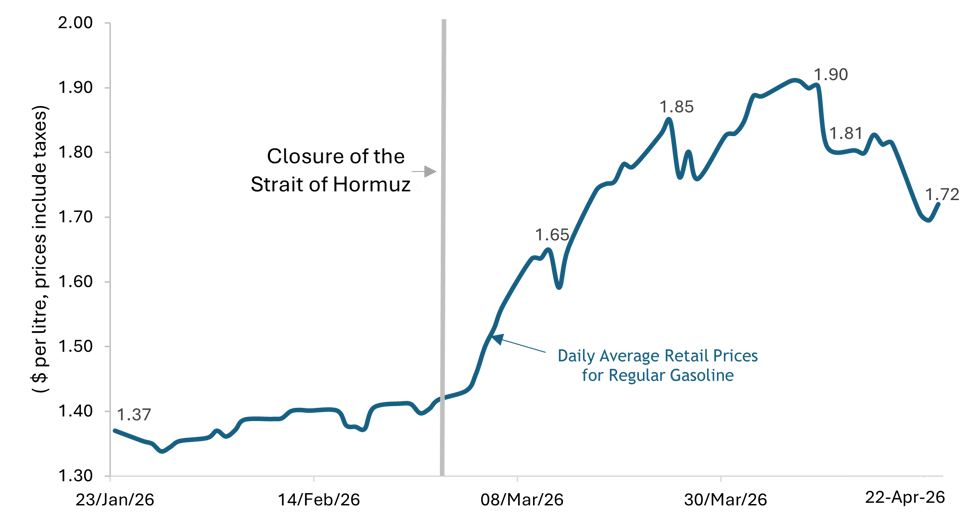
Over the past three months, the national average price of regular gasoline rose sharply, climbing by roughly 39% from about $1.37 per litre in late January to nearly $1.90 per litre by April 09, 2026 (Figure 1). Sharp increases were recorded in major urban centres, and even traditionally lower price markets experienced clear upward trends, underscoring the broad based nature of fuel cost pressures.
Figure 1: Despite recent easing, gas prices remain elevated relative to pre-crises levels
Sources: Natural Resources Canada, Daily Average Retail Prices for Regular Gasoline in 2026
Despite the federal government’s temporary suspension of the fuel excise tax effective April 20, fuel prices remain elevated. As of April 22, regular gasoline averaged $1.72 per litre, still about 26% higher than at the end of January (Figure 1).
Crucially, this volatility is not expected to ease quickly. Even under a scenario where current geopolitical tensions stabilize in the coming weeks, current estimates suggest that a normalization of energy prices would not occur until late 2026.[1] Business owners share this view, with 85% reporting being concerned that energy prices will negatively affect their business over the next 12 months.[2]
The share of SMEs reporting fuel cost difficulties reaches a record high
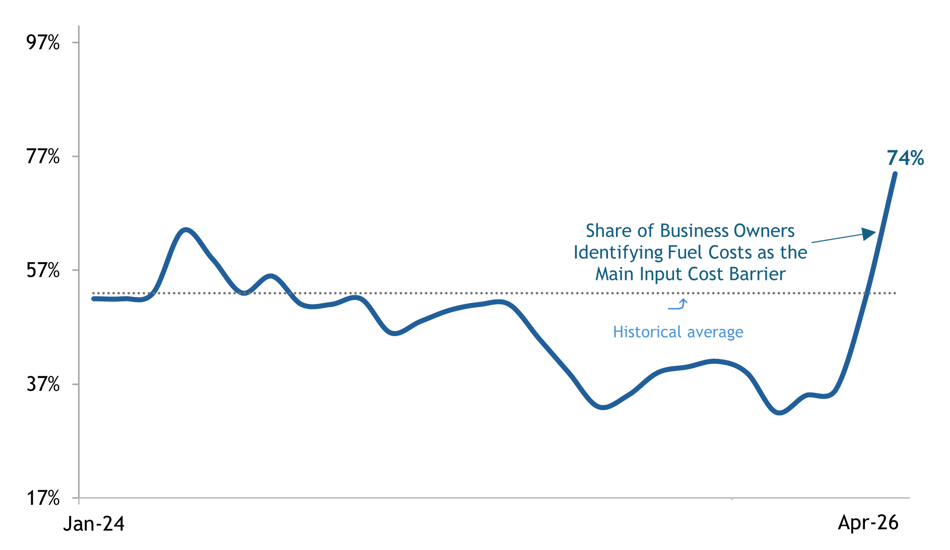
Against this backdrop, the latest CFIB Monthly Business Barometer® — a long‑running national survey tracking small‑business conditions and cost pressures — signals an unprecedented escalation in fuel-related stress. The share of business owners reporting difficulties from fuel costs is 74% in April 2026, a record high for the data series (Figure 2). As a result, fuel now stands as the commonly reported input cost constraint facing SMEs in April, surpassing other top issues related to labour, taxes and other operating expenses.
Figure 2: Fuel costs reach a record high as the top input cost barrier for SMEs
Source: CFIB, Your Business Outlook Survey, September 2013-April 2026.
Question: What types of input costs are currently causing difficulties for your business? (select as many as apply)
Note: Beginning in January 2024, the response option “Fuel, energy costs” was split into three distinct categories: “Fuel costs,” “Electricity costs,” and *“Other energy costs.” As a result, data prior to January 2024 reflect a combined measure of fuel, electricity, and other energy costs.
Fuel costs now dominate the business challenge landscape
To examine how rising fuel prices are affecting Canadian small businesses, how owners are responding, and the implications for energy policy, this analysis draws on results from two CFIB surveys: the Your Voice Omnibus Survey for April 2026 and a special Energy Survey conducted in March 2026.
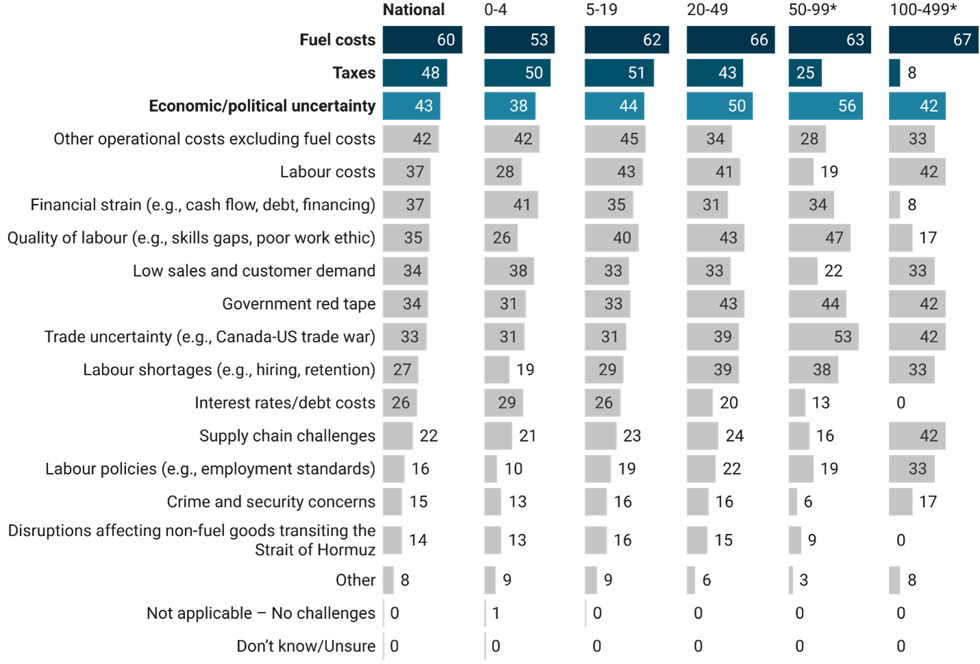
Consistent with the Monthly Business Barometer our latest omnibus survey confirms that fuel costs have shifted beyond a growing concern to become the most pervasive challenge facing Canadian businesses. Nationally, six in ten business owners identify fuel costs as one of their biggest challenges right now, making it the most frequently cited challenge overall (Figure 3).
Fuel costs are rarely a standalone issue. Businesses facing higher fuel prices are simultaneously contending with taxes, other operating costs, economic uncertainty, and financial strain. These pressures compound one another, tightening margins and limiting operational flexibility.
Figure 3: Fuel costs are businesses' biggest challenge
Sources: CFIB, Your Voice survey, preliminary results as of April 9, 2026. Ongoing survey, n= 1,130.
Question: What are the biggest challenges your business is facing right now? (Select all that apply) [Share of respondents (%)]
Notes: *Small sample size (<40).
While fuel costs affect businesses of all sizes, exposure increases with firm size. The share of businesses citing fuel costs rises steadily with the size of the business, reaching nearly two thirds among firms with 20 to 49 employees (Figure 3). Larger SMEs tend to operate more vehicles, move higher volumes of goods, and rely more heavily on energy intensive logistics, making them especially vulnerable to fuel price shocks. Smaller businesses, particularly micro firms (0-4 employees), report slightly lower direct exposure, but are more likely to cite financial strain and weak demand alongside rising fuel costs, suggesting that even modest cost increases can have outsized cash flow impacts.
Sectoral differences further amplify this pattern. Fuel costs are most heavily reported as a challenge in agriculture, transportation and utilities, construction, and hospitality, where fuel use is deeply embedded in daily operations. In agriculture and transportation, more than four in five businesses report fuel costs as a challenge, reflecting both direct consumption and exposure to global supply disruptions. Elevated fuel pressure in construction and hospitality highlights how higher energy prices are now rippling through supply chains, affecting both goods producing and service-based based sectors, even where fuel is not a primary input.
How are SMEs responding to rising fuel costs?
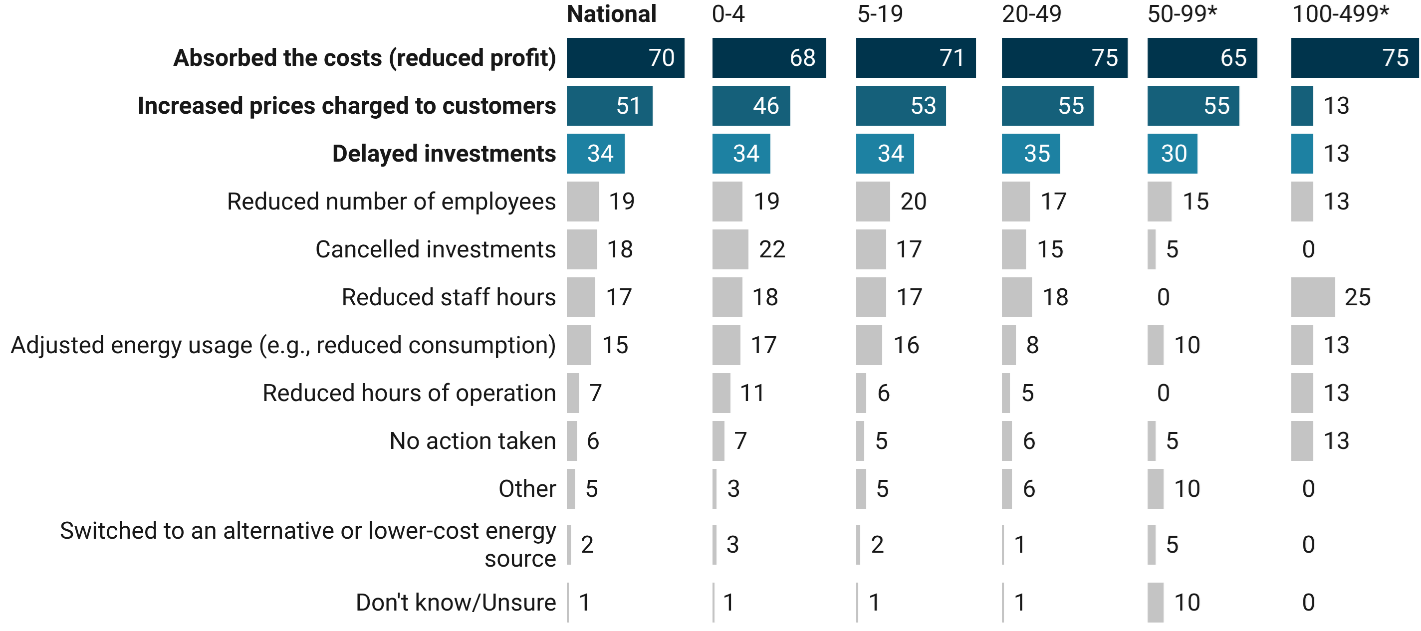
Canadian SMEs facing high fuel costs are responding largely through short‑term cost containment rather than structural adjustment. Nationally, seven in ten businesses impacted by fuel costs pressures report absorbing increases through lower profits, highlighting limited flexibility to adapt. Beyond compressed margins, half have increased prices charged to customers, one‑third have delayed planned investments, and close to one in five have cancelled investments altogether (Figure 4).
Figure 4: Businesses shoulder rising fuel costs, with limited pass-through to customers
Sources: CFIB, Your Voice survey, preliminary results as of April 9, 2026. Ongoing survey, n= 671.
Question: What actions, if any, has your business taken in response of rising fuel costs? (Select all that apply) [Share of respondents (%)]
Note: *Small sample size (<40).
Overall, response patterns are largely consistent across both business size and sector. By business size, the same top three measures emerge across most categories, indicating a broadly shared set of responses. Similarly, sectoral patterns show a high degree of alignment, with absorbing higher costs through reduced profits ranking as the leading response in every sector. The main point of differentiation is that construction, transportation, and wholesale businesses are among the most likely to also pass these costs on to customers, reflecting their greater exposure and more limited flexibility to absorb sustained cost increases.
When business owners are being forced to not only accept lower profit margins, but also, in some cases, to raise their prices, this, in turn, erodes consumers’ purchasing power and weakens demand for businesses’ goods and services. Over time, this dynamic creates a vicious cycle for SMEs, in which higher costs, weaker demand, and constrained profitability make operating and growing a business progressively more difficult.
It is within this broader context that CFIB has raised concerns about an emerging entrepreneurial drought in Canada, warning that the current economic environment is further intensifying these challenges. Addressing fuel and energy cost pressures therefore become a critical part of improving the overall business climate and supporting long‑term small business viability.
Improving SME energy resilience
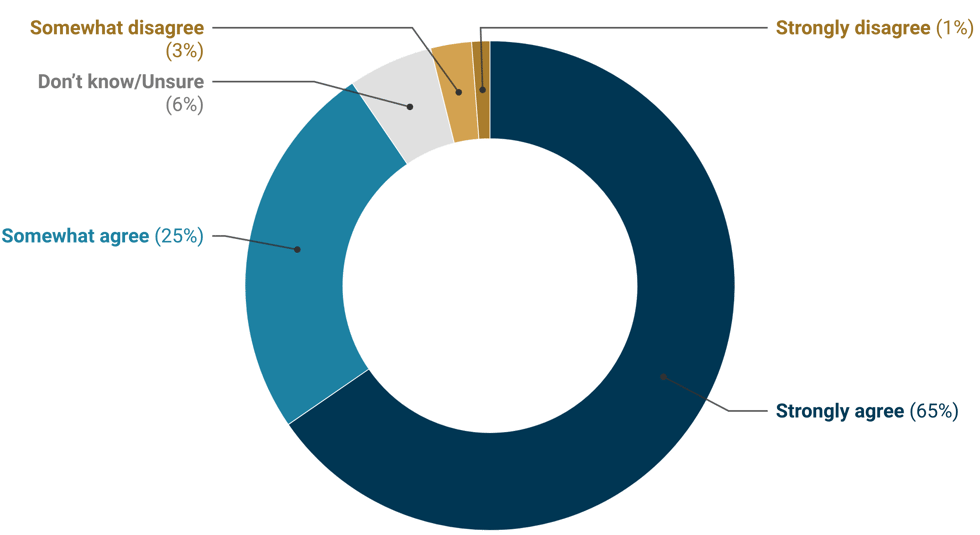
Efforts to protect our economy from external shocks require making better use of domestic resources to mitigate the impact of external disruptions. In the case of energy and fuel, a key solution for Canada lies in more fully developing its domestic energy resources—a view strongly shared by SMEs. Nearly nine in ten small businesses believe Canada should move quickly to increase energy production, including oil and liquefied natural gas, to address potential shortfalls caused by global disruptions (Figure 5).
Figure 5: Nine in ten businesses support expanding Canada's energy supply to address global disruptions
Sources: CFIB, 2026 Energy Survey – March 2026, preliminary results as of March 5, 2026. Ongoing survey, n= 1,226.
Question: To what extent do you agree or disagree with the following statements about energy? |Canada should move quickly to increase its energy supply (i.e., oil, liquefied natural gas) to fill potential shortfalls caused by global energy disruptions
In this spirit of action, the federal government recently announced a temporary suspension of excise taxes on gasoline and diesel, effective from April 20 to September 7.
Beyond immediate tax relief, SMEs are clearly calling for a more coherent and coordinated long‑term energy strategy. Canada is well positioned to reduce its exposure to global energy disruptions, with the world’s third‑largest proven oil reserves, the fourth‑largest uranium supply, and nearly 80% of electricity generation coming from carbon‑free sources.[3] National coordination is essential to ensure that Canada can benefit from its energy strengths.
Conclusion
Rising fuel prices have become a central challenge for Canada’s SMEs, exposing their limited capacity to absorb prolonged energy cost shocks. To cope, many SMEs are accepting lower margins, selectively passing on costs, and delaying or cancelling investments—measures that may provide short‑term relief but risk undermining long‑term competitiveness and growth. With fuel price volatility now a core operational constraint, businesses need greater cost predictability and more than temporary relief to plan, invest, and adapt in an increasingly uncertain energy environment.
To help small businesses manage ongoing fuel cost pressures and remain operational, governments can:
-
Eliminate the “tax‑on‑tax” permanently: The federal government should permanently eliminate the “tax‑on‑tax” practice of applying GST to fuel excise taxes.
- Provide excise tax relief during periods of elevated prices: Federal and provincial governments should suspend or reduce excise taxes on fuel until prices return closer to pre‑crisis levels.
- Strengthen Canada’s long‑term energy affordability and security:
Federal and provincial governments should accelerate infrastructure projects, improve market access, and strengthen east‑west energy integration to help stabilize prices and enhance affordability for businesses nationwide.