


Precision. Performance.
Professional Support.
Running an automotive business has never been more complex. Rising operating costs, supply chain disruptions, parts shortages, and ongoing labour challenges are putting pressure on businesses across the industry.
That's where CFIB can help.
Our experienced business advisors provide practical support and guidance on:
- Employment regulations and workplace issues
- Hiring and retaining employees
- CRA obligations and compliance
- Workers' compensation matters
- And much more
Whether you're managing day-to-day operations or planning for growth, we're here to help you navigate challenges, reduce risk, and focus on what you do best: serving your customers and growing your business.
Running an automotive business is challenging. We make it easier.
"It costs more to get the vehicle through the door, more to repair it, and more to keep the business running."
Parts, Supply Chain & Rising Costs
For automotive businesses, rising costs go far beyond inflation. From parts shortages and supply chain disruptions to increasing equipment, labour and operating expenses, business owners are facing pressure from every direction.
Businesses continue to face:
- Rising costs for parts and materials
- Uncertainty around OEM parts availability
- Shipping delays and higher logistics expenses
- Increased diagnostic, calibration and equipment costs
- Lost revenue when delayed parts occupy valuable shop space
- Challenges recovering costs due to insurance and customer affordability concerns
- Higher overhead expenses, including rent, utilities, insurance, financing and payroll
These pressures are squeezing margins and making it harder to invest in growth, technology and the future of their business.

"You can have customers, vehicles and work waiting. None of it matters if you don't have the people to do the work."
Labour Shortages & Workforce Costs
Labour shortages continue to be a major challenge for automotive businesses. Finding qualified workers is difficult, and retaining them is increasingly expensive.
Businesses rely on a wide range of skilled professionals, including:
- Automotive service technicians
- Collision repair specialists
- Painters and refinishing technicians
- Estimators
- Glass technicians
- Tow truck operators
- Tire technicians
- Parts specialists
- Diagnostic and calibration experts
- Service advisors
- Detailers and installers
- Technicians trained in ADAS, vehicle electronics, hybrid and electric vehicle systems
As competition for talent grows, businesses are spending more on wages, training and retention. Without a strong pipeline of skilled workers, many are forced to turn away work, delay expansion plans and limit future growth.

CFIB Research

Canada needs an environment where entrepreneurs can succeed, invest and grow. CFIB's Entrepreneurial Drought report examines the pressures facing small businesses and highlights actions governments can take to help reverse the decline in entrepreneurship.

CFIB research highlights the workforce challenges affecting small businesses across Canada and identifies policy solutions that can help employers attract, train and retain the talent they need.
Make the Most of Your Membership


Get access to:
- Combined decades of HR expertise.
- An 80%+ live response rate and unique “members’ first” approach.
- Our NEW Concierge tool: Providing you with a list of compliance and best practice items tailored to your business.
- Expert guidance, when you need it most!

Explore over 50 FREE online courses, offered by our partner Vubiz, for you and your employees to enjoy.
Courses include:
- Workplace Hazardous Materials Information System (WHMIS)
- Accident Investigation (CCOHS)
- And so much more!

You can access our community of over 100,000 small businesses!
Promote your small business offerings and discover local small business owners just like you to support. It takes a village to grow your business. Connect to yours!
Already a member? Sign In
Unfinished Business
Costs are rising and profits are shrinking. You know the challenges: parts are more expensive, wages are rising, and government regulations keep piling up. It’s time for action. Add your name to demand that politicians and policymakers reduce the cost of doing business and let auto entrepreneurs focus on what matters most: serving customers and creating jobs.
Together we can deliver a powerful message to politicians: reduce the cost of doing business and cut the regulatory burdens that hold us back.


Exclusive Savings on Mac Tools – Built for Professionals! Mac Tools provides CFIB members with a direct purchasing avenue.

Save on fuel costs and take control of your fuel management with the Esso™ and Mobil™ Business Fleet Card Program.


Shopmonkey helps CFIB members manage work orders, customers, scheduling, and invoicing in one platform.

Payworks helps manage your workforce by providing cloud-based solutions for Payroll, Human Resources, Employee Time and Absence Management.

Square helps CFIB members accept payments, manage sales, and streamline daily operations.
Report: Are You Highlighting Any Research or Reports Here?
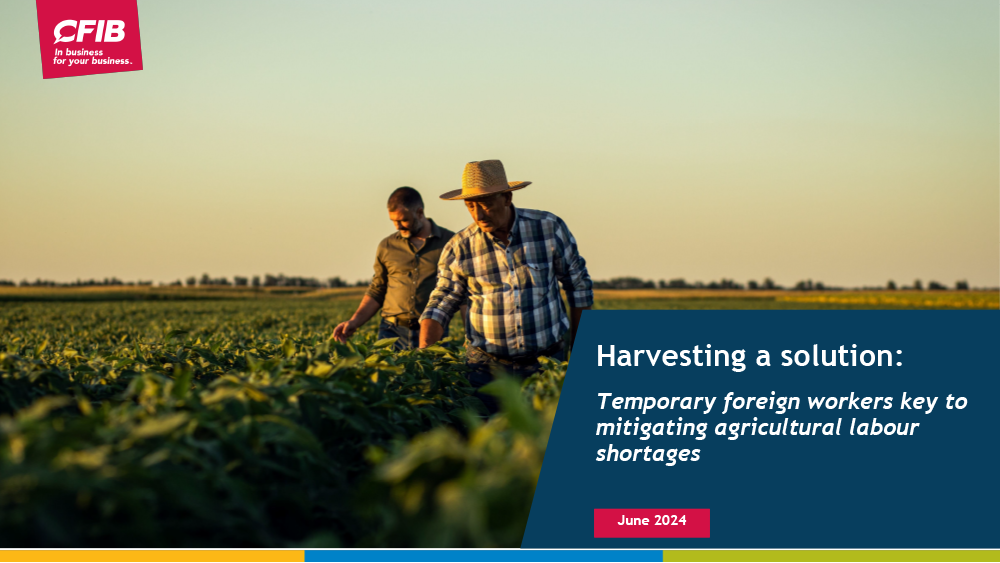
Temporary foreign workers key to mitigating agricultural labour shortages.
Agri-businesses in Canada face persistent labour shortages. In 2022, labour shortages in agriculture amounted to $2.8 billion in lost contracts or sales, thereby limiting sales and production growth. The problem is not going away with estimates from the Canadian Agricultural Human Resource Council suggesting there will be 100,000 vacant jobs in the agriculture sector by 2030.